
Let’s be honest. Maintaining a steady flow of qualified leads through your sales pipeline is an ongoing battle. It requires a lot of resources, specialised knowledge, and time, which can quickly distract the core team from what they do best.
If this fight sounds familiar, know that you are not alone. An increasing number of smart businesses are now outsourcing their lead generation.
But how do you know if such an approach is the right strategic move for your company? That’s where this guide comes in to offer actionable responses.
We’re going to take you through the many real benefits of outsourcing lead generation, cover some potential pitfalls along the way and offer a simple, five-step plan to ensure that your outsourced lead generation efforts deliver fantastic results.
What Does Outsourcing Lead Generation Mean?

In essence, outsourcing lead generation is when you join hands with an outside expert lead generation platform to manage part of your strategies associated with finding quality leads. Basically, it’s like hiring an extension of a marketing team whose one sole goal is to help fill the top of your funnel.
Outsourcing lead generation is far beyond the old tactics of cold calling rooms; it is now a complex mixture of tactics and strategies connected with finding and getting the attention of quality leads.
A professional lead generation partner might handle paid social media advertising, execute high-end email campaigns, or optimise your content for search engines. The objective is the same: to create a consistent flow of qualified sales leads so your salesperson can spend their time closing deals.
Scale your business effortlessly
The Benefits Of Outsourcing Lead Generation
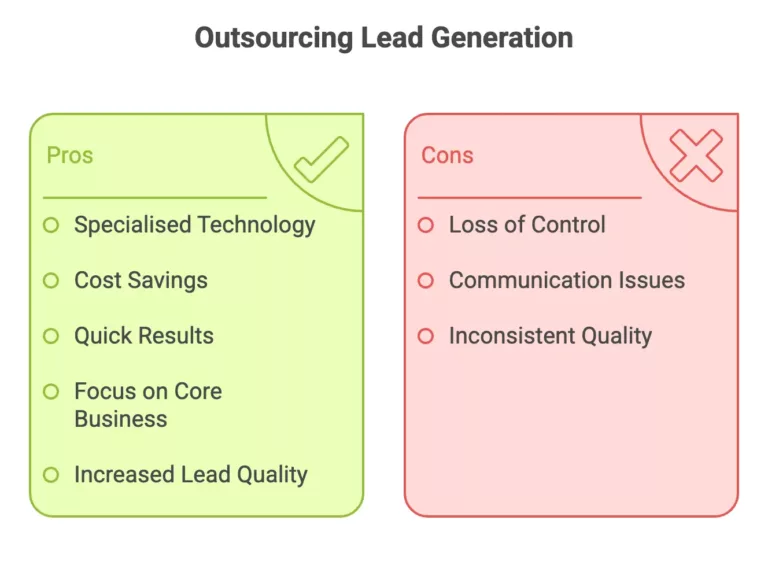
There are many reasons why businesses choose to partner with a lead generation platform. Here are some of the reasons:
1. Access To Specialised Technology
Quality lead generation depends on a stack of software for analytics, automation and CRM, all of which are usually costly.
A lead generation agency not only has these tools but also specialises in using them. You get to enjoy the fruits of these tools without those premium subscription fees.
2. Cost Saving
Simply compare the cost of hiring, training, salaries and benefits, including your own overtime, to a predictable investment on a monthly basis for a lead generation platform. It’s significantly more economical.
Moreover, you can go higher or lower in scale based on campaign performance or number of quality leads, giving flexibility that white-label internal teams cannot.
3. Quick Results
A professional lead generation agency eats, sleeps and breathes quality leads. They have a tried-and-tested process and specialised channels ready to bring in leads.
This allows them to bring campaigns to market, test them, and optimise them at a much faster pace than an in-house team setting them up from scratch, which ultimately reduces the time it takes to see a return on your investment.
4. Focus On The Core Business
Your team should focus on your product, serving customers and guiding the company’s vision. By delegating the challenging lead generation process to the pros, you save precious internal bandwidth. Your team can focus on specialised work that helps you stand your ground in the market.
5. Increases Lead Quality
Quality over quantity. A professional lead generation agency will do the internal work to understand your ICP. They have a system so rigorous that by the time they pass a lead to your sales team, you have incredibly high chances of closing them, which results in improved conversion rates and sales efficiency.
Types Of Lead Generation Services You Can Outsource

Most people think of cold calls and bulk emails when they hear the term “outsourced lead generation”. But the reality in 2026 is much more complex. A team of professional lead generation partners can oversee many aspects of outsourced services, and knowing them all enables you to choose the one that benefits your business the most.
1. Cold Email Outreach
It’s one of the most common outbound channels used. One of the benefits of using a lead generation agency is its ability to determine the real type of customers you are looking for, create personalised email sequences, and manage deliverability so that messages go into inboxes, not spam folders. When done well, cold email generates a steady stream of leads without requiring your team to lift a finger.
2. LinkedIn Outreach
LinkedIn is the hands-down most powerful platform for B2B prospecting. LinkedIn generates around 80% of social media leads for B2B and is used by 89% of B2B marketers as a lead generation platform. This includes targeted connection requests, personalised messages, and follow-up sequences.
3. Telemarketing and Cold Calling
Telephone outreach is still relevant, particularly for high-value transactions. A dedicated team takes care of the prospecting calls, bypasses gatekeepers, and uncovers decision-makers, so only the conversations you actually want to have make it to your phone.
4. Appointment Setting
Some agencies take it a stage further by booking qualified meetings directly into your sales team’s calendar. It means your reps only show up to pre-vetted calls with prospects that already have a level of interest.
5. Search Engine Optimisation (SEO)
SEO-based lead generation is about putting your site in front of prospects who are looking for what you do. B2B SEO is one of the highest-return long-term investments you can make, providing around 35% of high-quality leads.
6. Paid Advertising (PPC)
Google, LinkedIn, and other paid click campaigns start delivering leads quickly. An agency takes care of targeting, ad copy, budget allocation, and continuous optimisation, ensuring that your cost per lead remains as low as possible.
7. Content Marketing and Lead Magnets
This approach means writing blogs, guides, white papers, and similar resources that pull in your target buyers naturally. Prospects provide their contact information in return for valuable content, and so this is a warm inbound lead instead of a cold one.
8. Account-Based Marketing (ABM)
ABM completely changes the way lead generation works. Rather than a shotgun approach, you create a list of high-value target accounts and run highly personalised campaigns targeted directly at the decision-makers in those businesses.
9. Multi-Channel Campaigns
The best agencies integrate many of the above into integrated patterns. In fact, multi-channel campaigns generate lower cost-per-lead than single-channel efforts. This is the reason that over the last several years, the best lead generation partners have moved away from just one tactic.
The important thing to remember here is that you don’t have to outsource everything. Many businesses begin with a channel or two and build on it as results materialise. What is critical is finding a partner who can customise the service mix to your particular aims.
The Limitations Of Outsourcing Lead Generation
The advantages of outsourcing lead generation are compelling, but it’s also right to look at the other side. Here are some limitations and their preventions:
1. Loss Of Direct Control
Giving up the direct control of such an important activity like lead generation isn’t easy for many entrepreneurs.
Prevention: Select a partner who is transparent in their dealings. Be sure to demand frequent, transparent reporting and insist on open access to campaign dashboards. A beneficial partnership is collaborative, not distant.
2. Communication Issues
If your team doesn’t echo the thoughts and statements of the lead generation agency, everything from efforts to workflow will feel redundant.
Prevention: Establish a transparent communication channel from the outset. Who is the first person you interact with? How frequently will there be strategy calls? Set these expectations early to ensure everyone is in agreement.
3. Inconsistent Quality Of Lead Generation Platforms
The market is overflowing with agencies, but not all of them live up to their claims. It’s an expensive mistake if you pick the wrong partner.
Prevention: Finding the best lead generation platform is the most important step. Conduct thorough research. Ask for client references and case studies. Don’t just listen to their sales pitch; examine their track record of results in the real world.
When Not To Outsource Lead Generation?
While the benefits listed above make outsourcing lead generation sound compelling, this isn’t a solution for every business.
If anything resonates with you in the following list, you may need to re-evaluate the decision to outsource:
- Your product is high-tech and requires technical expertise.
- Your target audience is niche-specific
- You have enough marketing and sales employees in-house.
- Your company culture values direct customer relationships.
- You had a previous negative experience with outsourcing lead generation.
In-House vs. Outsourced Lead Generation Cost Comparison
It is crucial to keep in mind that a proficient in-house lead generation team requires more expense than merely paying salaries. Hidden costs rapidly increase the expense, which makes outsourced lead generation more cost-efficient for SMEs.
Here is a clear comparison:
| In-House Costs | Outsource Costs |
|---|---|
|
Salaries and benefits for multiple roles such as SDRs, managers, and marketers |
A single predictable monthly fee |
|
Expensive automation tools, software and CRM analytics |
Advanced tools and software are included in the service |
|
Costly training and skill development programs |
No hidden hiring or training costs |
How To Successfully Outsource Lead Generation: A 5-Step Process
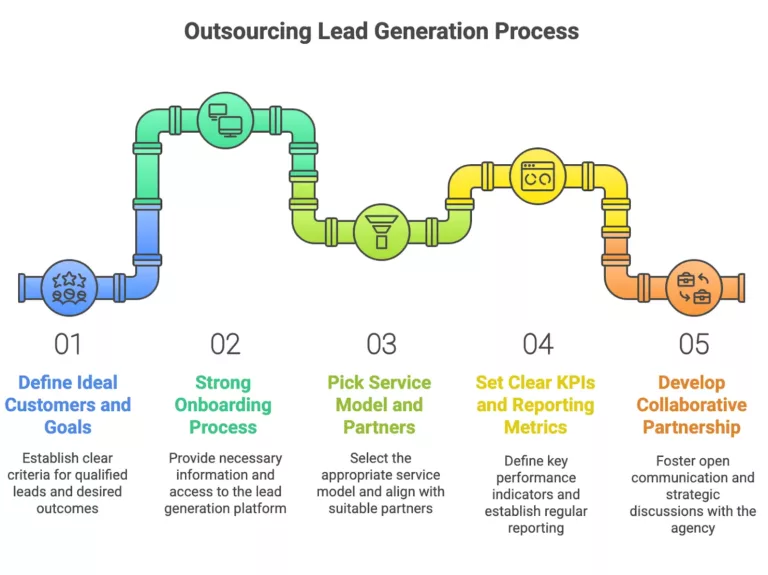
The ability to outsource lead generation systematically is the heart of any successful partnership. Follow this simple 5-step process:
1. Define Your Ideal Customers And Goals
Ensure you have a clear internal understanding before engaging with a lead generation agency. Whom do you consider a qualified lead? How many referrals are you looking to send us each month? Who is your ideal customer? Document all of these variables thoroughly.
2. Strong Onboarding Process
The partnership is as good as the beginning. Provide the lead generation platform with comprehensive brand guidelines, product specifications, and access to key team members. If they are to properly represent you, this exchange of information is crucial.
3. Pick Service Model And Partners
Determine whether you would prefer a full-funnel service or assistance with just one channel. Thereafter, shortlist a few lead generation platforms. Look over their case studies, request references; and ensure that their culture and communication style align with yours.
4. Set Clear KPIs And Reporting Metrics
Define KPIs upfront. This should include not only the volume of leads but also their quality, cost-per-lead, and conversion rates. Establish a regular reporting period: weekly or monthly to check out the progress.
5. Develop Collaborative Partnership
Consider viewing the lead generation agency as an integral part of your team. Give feedback on lead quality regularly, be prepared for strategic conversations and keep the lines of communication open. This partnership transforms a basic vendor relationship into a powerful growth engine.
Lead Scoring And Quality Assurance: How Is The Quality Of The Outsourced Lead Assured?
Lead quality is one of the largest issues that businesses have with outsourcing lead generation. Volume is easy to manufacture. Genuine, sales-ready leads are not. Knowing how a professional agency handles lead scoring and quality assurance helps you understand what distinguishes potential partners from those who simply flood your inbox with names.
What Is Lead Scoring?
Lead scoring is the process of assigning a score to each prospect based on how closely they match your ideal customer profile and what level of interest they’ve demonstrated. And the higher it is, the more ready that lead is for a sales conversation.
Companies that use lead scoring frameworks tend to see their lead-to-opportunity conversion rates increase and marketing-driven revenue double.
Instead of viewing all contacts identically, lead scoring helps your sales team determine where to invest their energy more efficiently on leads that are most likely to convert rather than going after every single person who clicked a link.
What A Lead Score Really Takes Into Account?
A good scoring model will measure two things: fit and intent.
Fit determines how closely a prospect aligns with your ideal customer: their industry, company size, job title, location, and budget range. A managing director at a 50-person telecoms company is a much better prospect than an executive with a junior job title at any old firm outside your target market, even if that person has visited your website.
Intent is a measure of how active a prospect is in displaying signals to buy. If they are engaging with your content, responding to outreach, asking for more information, or demanding urgency from their side, then you should take action.
Organisations employing AI-driven scoring methods experience an increase in accuracy when compared to traditional means, while appropriately scored and qualified leads enjoy increased conversion rates.
How Does Quality Assurance Work?

A real lead generation tool doesn’t just paper-score leads; it builds a quality assurance process around them. This typically includes:
1. ICP Alignment Checks: The agency defines in detail who your ideal customer is before any outreach has started and works with you on aligning findings. And every lead is then rated against that definition before being distributed.
2. Contact Validation: Phone numbers, email addresses, and company information get validated. Any outdated or incorrect data is cleaned up before it ever gets to your team.
3. Intent Confirmation: In leading platforms, intent is not presumed; it is confirmed. This could necessarily be an action a prospect has taken, agreeing to receive more information or showing clear interest in your product or service.
4. Feedback Loops: Quality assurance is not a single exercise. A good agency uses the feedback your sales team gives them on lead quality to constantly enhance their targeting approach and scoring criteria and eliminate trends that create low-quality outputs.
What This Means for Your Sales Team?
Most of the marketing leads are unqualified for sales contact, and they never convert. It is not only frustrating; when your team spends time pursuing the wrong prospects, it is costly as well. Every hour you spend on an unqualified lead is an hour not spent closing a deal.
At the source, a platform solves this problem by investing in rigorous lead scoring and quality assurance. You reduce the number of leads that hit your sales reps, but make sure it’s one worth their while. Your conversion rates improve, your sales cycles shorten, and your team’s confidence in the pipeline builds.
This is the standard that ProInteractive demands of itself. No more “what-if” scenarios delivered on a whim, only leads that have been qualified and vetted against your specific criteria, and that’s before they’re ever pushed through to you. That results in a pipeline your sales team can feel confident about.
How To Choose The Best Lead Generation Agency?

There are so many options on the market that it can feel overwhelming to find the right partner. A bad choice will cost you time and money. The right one acts as an extension of your sales team, a reliable engine for growth. Here is what to look for:
1. Verified, Pay-Per-Lead Model
The pricing model that a platform uses is a good indicator of how confident they are in their results. Agencies that charge a flat retainer with no relation to output have no accountability. You want platforms where they get paid only when they deliver leads, aligned directly with your success.
2. Industry Coverage And Sector Expertise
Not each platform works for all business sectors. Make sure the agency still has active experience in your sector before committing. A partner who understands your market, terminology, and buyer behaviour will ramp up much more quickly and produce better-qualified leads.
3. Transparent Reporting And Dashboard Access
You should never have to guess what is going on with your pipeline. A reliable platform offers transparent, frequent reporting on lead volume, lead quality, cost per lead, and conversion performance. It is better if you have live access to a dashboard so you can see results instead of the monthly report.
4. Clear Lead Verification Process
Specifically, ask how leads are qualified prior to being passed to you. Do they pass validation against your ideal customer profile? Is there a verification process for contact details? Is intent confirmed before handover? The difference between true quality platforms and those peddling contact lists is how they answer these questions.
5. Flexibility And Scalability
Your business needs will change. The right partner can ramp up during growth periods and scale back during quieter times without getting you stuck in inflexible contracts. Companies that look into external lead generation can save a lot on SDRs when compared to internal hiring, but only if the model is flexible enough to keep pace with you.
6. Strong References
Any agency can promise results. But make sure to ask for case studies, client references, and examples of performance in your sector. Seek proof of repeatable success over time, not just one killer campaign.
7. Alignment On Communication And Culture
The best lead generation partner doesn’t just provide leads and then leave. They collaborate with your team, solicit feedback on lead quality, and refine their approach based on what is and isn’t working. If that type of collaborative relationship is not something a platform wants to cultivate, that’s a warning sign.
Why ProInteractive Stands Out
ProInteractive is a model that meets all of these criteria. It serves as a verified pay-per-lead platform, so you’re only paying when leads meet your standards, not for effort or volume alone.
Covering sectors as diverse as merchant services, telecoms, IT, finance, and green energy, the platform offers industry professionals with relevant experience that translates into better-qualified introductions.
However, what truly differentiates ProInteractive is the combination of proprietary sales automation technology with a person-driven qualification process. We also have a well-defined verification workflow for every lead before it reaches your team, and the clients get access to all data without hiding behind an integrated platform.
No over-promises, only a clear, metrics-based approach centred on your ideal customer profile. ProInteractive is a model that is exceptionally difficult to replicate for businesses seeking growth without the cost and complexity of developing an internal team.
Get Quality Leads With ProInteractive Today!
The world of how to outsource lead generation may seem complex, but the right platform makes everything simple. If you want a team obsessed with transparency, quality and ROI, then it’s time to get in touch with ProInteractive.
We don’t think there is a one-size-fits-all answer. Rather, we construct unique lead generation channels to send out clients high-quality leads that their business can count on.
Are you ready to power up your sales pipeline? Contact ProInteractive and see what we can produce together.
FAQs
Prices differ greatly depending on the quality and number of leads you want. The best lead generation platforms will give you a clear pricing after talking about your potential goals.
It can take at least 1 to 3 months to get proper lead flow going, though some short-term strategies bring leads right away.
A successful agency will fully absorb your brand’s voice, values, and target audience. That is why the first onboarding process is critical to making them understand your brand.